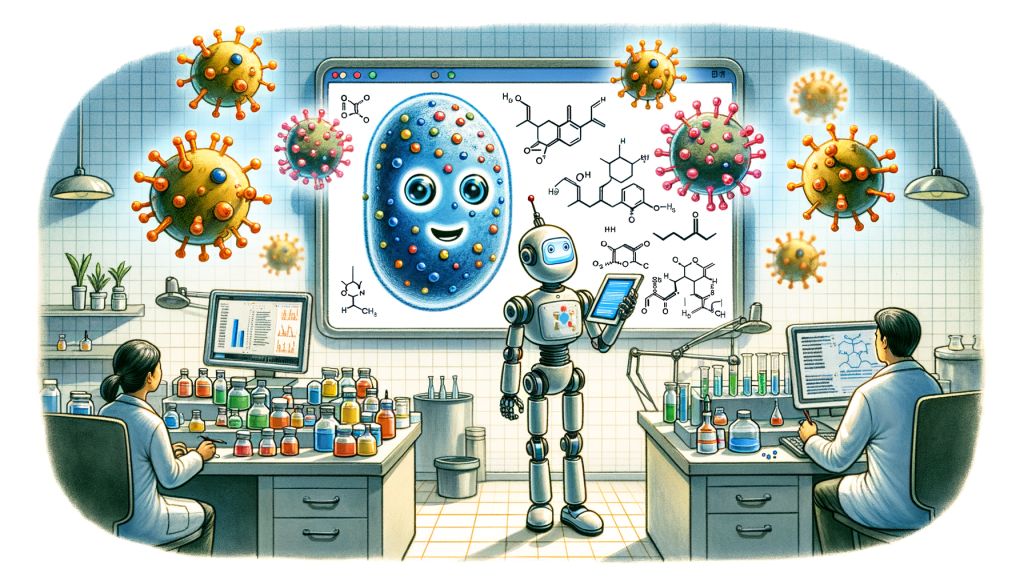
Researchers at MIT have used deep learning, a form of artificial intelligence, to identify a new class of compounds that can kill drug-resistant bacteria. The compounds were found to be effective against methicillin-resistant Staphylococcus aureus (MRSA), a bacterium responsible for thousands of deaths in the US each year. The compounds also showed low toxicity to human cells, making them promising candidates for drug development. The researchers were able to determine the information used by the deep-learning model to make its predictions, which could aid in the design of even more effective antibiotics. The study is part of the Antibiotics-AI Project at MIT, which aims to discover new antibiotics against deadly bacteria. MRSA infections can lead to severe cases of sepsis, a potentially fatal bloodstream infection. The researchers trained a deep learning model using a large dataset and used an algorithm to understand how the model made its predictions. They screened millions of compounds and identified five classes of compounds that were predicted to be active against MRSA. Two compounds from the same class showed promising results in lab and mouse models. The compounds appear to disrupt the bacteria’s ability to maintain an electrochemical gradient across their cell membranes, without causing substantial damage to human cells. The findings have been shared with a nonprofit organization for further analysis and potential clinical use. The researchers are also using the models to search for compounds that can kill other types of bacteria. The research was funded by various organizations and foundations.