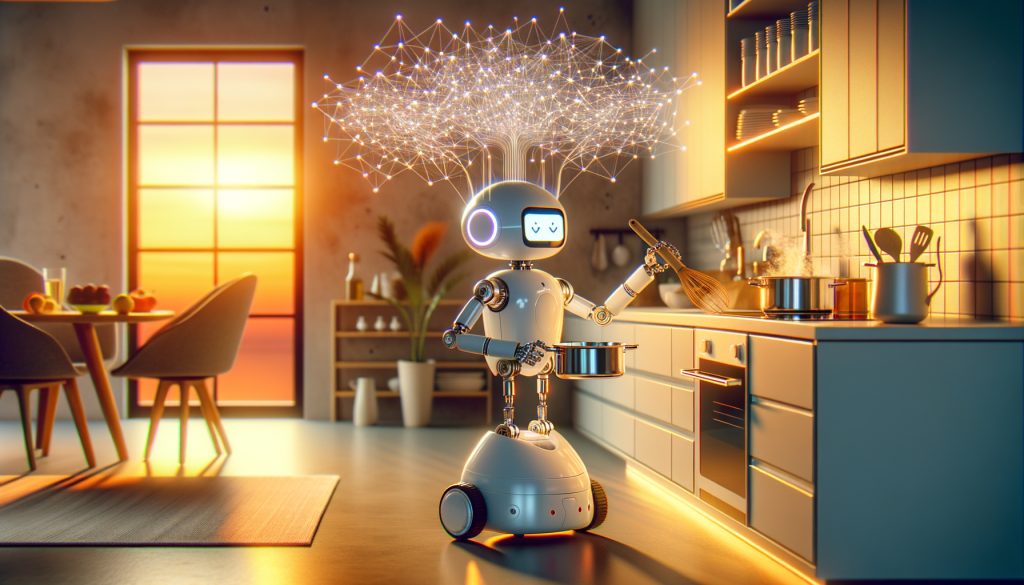
Researchers at Stanford University have developed a new AI system called Mobile ALOHA that trains mobile robots to perform complex tasks in various environments. The system addresses the high costs and technical challenges of training bimanual robots by learning from as few as 50 human demonstrations. Mobile ALOHA extends the existing ALOHA system by mounting it on a wheeled base, making it a cost-effective solution compared to off-the-shelf robots. The system allows simultaneous teleoperation of all degrees of freedom and can learn movement and control commands. Impressive demonstrations show the robot cooking a three-course meal and performing various housekeeping tasks. Mobile ALOHA utilizes transformers, an architecture used in large language models, and benefits from pre-training on diverse robot datasets. Co-training with existing data enables the system to achieve over 80% success on complex tasks with only 50 human demonstrations per task. However, the system is not yet production-ready and requires full demonstrations by human operators. The researchers plan to improve the system by adding more degrees of freedom and reducing its bulkiness. This work contributes to the development of versatile mobile robots and the field of helpful robots is rapidly advancing.