
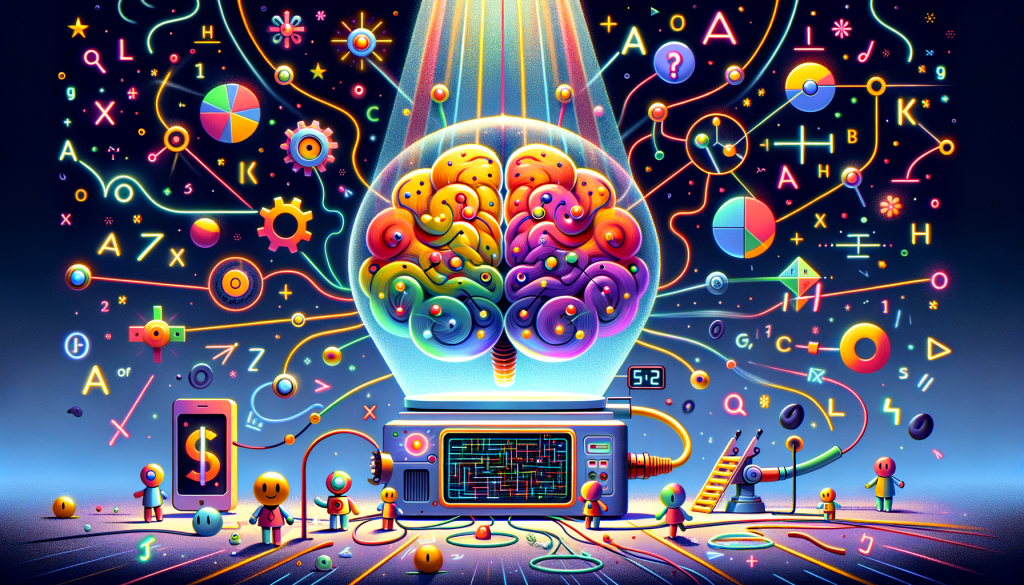
Create a positive illustration inspired by the joyous, playful, and imaginative animation styles before 1912. The image should decipher the intriguing world of AI research in a 3:2 aspect ratio. The central theme should be an AI 'brain scanner' used for analyzing large language models (LLMs). It could feature a large, colourful brain-shaped computer, beams of light indicating circuit tracing paths, and tiny figures (anthropomorphic representations of researchers) observing and engaging with the model. Animated math symbols, rhyming couplets and language symbols floating around the scanner can depict challenges in understanding mathematical logic and linguistic concepts. Make the overall atmosphere light, cheerful, and engaging, illustrating the fascination and curiosity driving this research.

Anthropic has developed an AI ‘brain scanner’ to understand how LLMs work and it turns out the reason why chatbots are terrible at simple math and hallucinate is weirder than you thought

Anthropic has introduced a novel AI 'brain scanner' to enhance understanding of large language models…
Read More
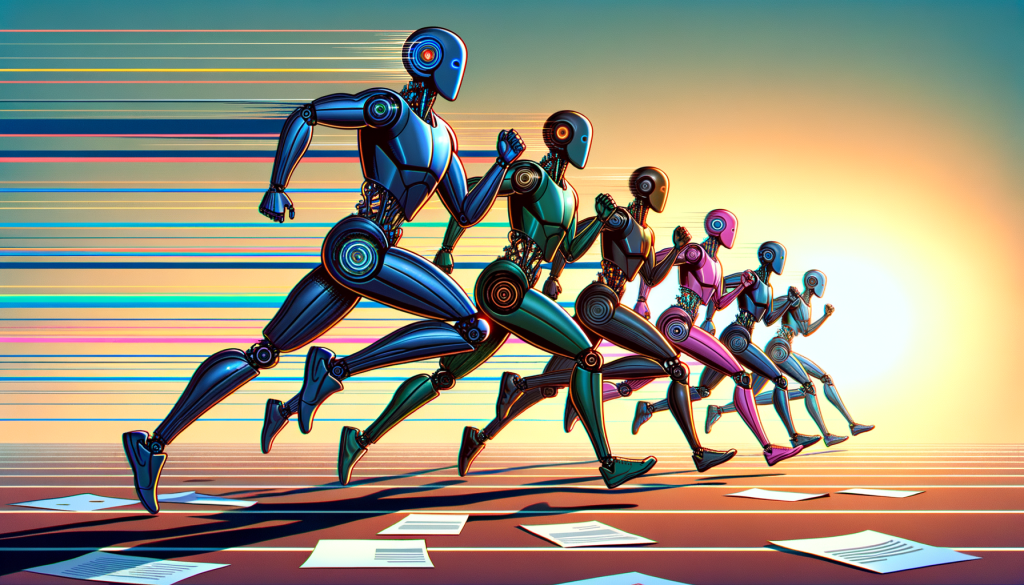
Generate an inspiring and light 3:2 aspect ratio illustration that encapsulates the concept of the AI race. Visualize an abstract running track representing progress in AI technology. On this track, depict a symbolic forward-moving trend showcasing multiple AI entities as runners, each styled as a different iconic robot. One of the runners should represent 'DeepMind' and could be visualized as a dark-toned robot with a sleek and modern design. Emphasize this DeepMind runner slightly ahead of the others but occasionally looking back, signaling careful monitoring of its competition. Yet, the foreground should show some papers scattered, representing the stagnating publications. The image should be colorful, hopeful, and appealing, similar to animation movies, but do not directly reference any copyrighted art styles.

DeepMind slows down research releases to keep competitive edge in AI race

DeepMind, Google's AI division, has significantly slowed its research publication process to maintain a competitive…
Read More