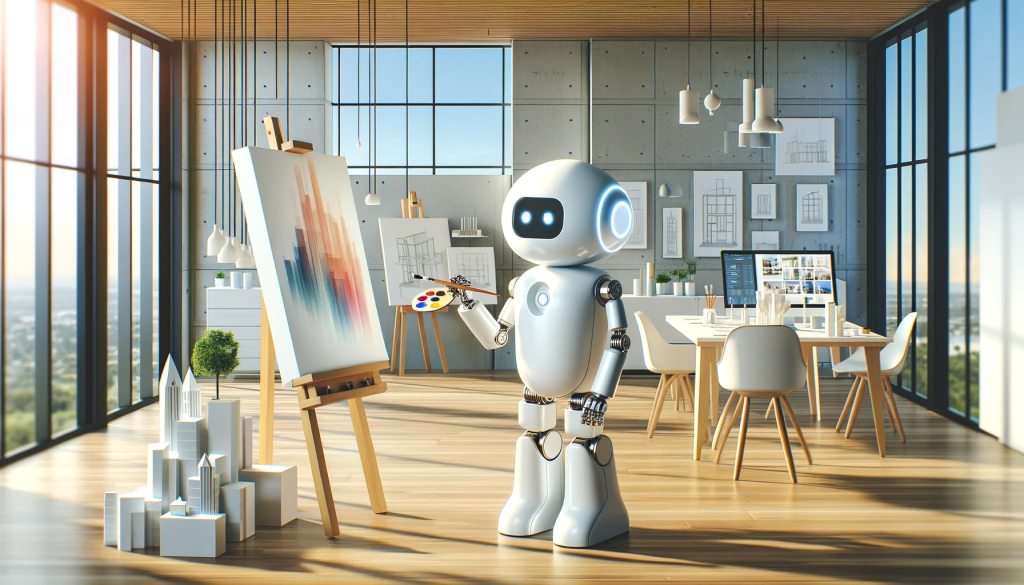
The integration of generative AI into architecture heralds a new era of innovation and creativity. Amid this technological revolution, Midjourney has emerged as a pivotal tool, empowering architects and designers to transcend traditional boundaries and explore unprecedented design possibilities. This article delves into the workings, benefits, and transformative potential of Midjourney in the architectural realm.
Understanding Midjourney
Midjourney stands as a beacon of innovation in generative AI, tailored specifically for architects. This advanced software leverages AI to craft unique, forward-thinking designs. It considers critical aspects like spatial dynamics, material selection, and environmental considerations. By employing Midjourney, architects can navigate through a multitude of design options, some of which may have been previously unthought-of, thereby catalysing more imaginative and groundbreaking architectural solutions.
This tool is especially valuable when confronting intricate design challenges or venturing into new conceptual territories. It offers architects a fresh perspective, fostering breakthrough ideas and novel solutions.
The Functionality of Midjourney
At its core, Midjourney utilizes machine learning algorithms that adapt based on architect feedback to create designs that align with specific requirements.
The workflow is as follows:
- Architects input a design brief into Midjourney, detailing elements like style preferences, location, and functional needs.
- Midjourney employs generative design technology to produce an initial concept based on this brief. While this initial design might need refinement, it provides a vital starting point.
- Architects review the design, offering feedback on its strengths and areas for improvement. Midjourney refines its output accordingly, inching closer to the architect’s vision with each iteration.
- This process of iteration and refinement continues until the architect achieves a satisfactory design outcome.
Advantages of Using Midjourney
- Efficiency: Midjourney automates numerous routine design tasks, allowing architects to allocate more time to critical project aspects like creativity, client communication, and project management.
- Enhanced Design Quality: The AI’s learning mechanism, fuelled by architect feedback, leads to designs that better satisfy client requirements and enhance overall client satisfaction.
- Boosted Creativity: Freeing from mundane tasks, architects can channel their efforts into more innovative and distinctive design aspects, distinguishing their work in a competitive market.
- Cost-Effectiveness: Midjourney’s efficiency can lead to significant cost reductions, enhancing the profitability and success of architectural practices.
Practical Applications and Examples
Midjourney’s versatility is evident in a range of architectural projects, from residential to institutional.
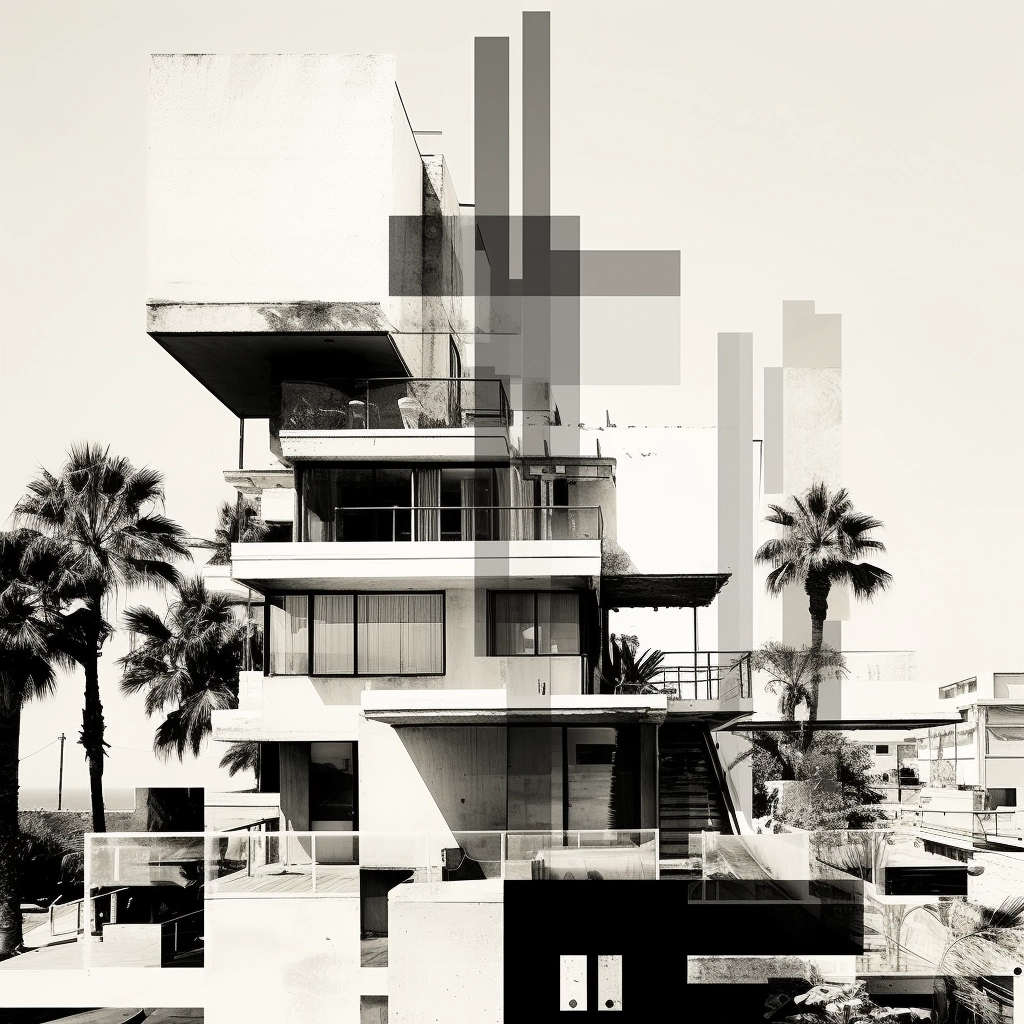
Prompt: create a black and white collage in the style of Peter Beard and Alex Daw, Tel Aviv architecture, cat and details architectural, architectural details close-up, bottom view, Bauhaus, details architectural, architectural details close-up, bottom view, Bauhaus –v 5.2
Result:
Prompt: Practical Architecture Concept and detail sheet (A2 landscape-orientated presentation boards) for house of future in Dubai (Building floors 2, total building floor area 300 sqm, plot size 15 m x 30 m), using contextual design and building materials, to keep out the heat and humidity and retain the cooler air, Frank Lloyd Wright style architecture, plan program consisting of Bedrooms: 5 bedrooms, Car Parking – 2 cars minimum Garden Pantry (Indoor preparation kitchen) Living room Washroom + WC (for each bedroom and living room) Dressing area for each bedroom, Dining area Server room Office Majlis (social hosting area, with privacy from the rest of the villa) Driver room + washroom (Segregated from house, for privacy reasons), Laundry & ironing room Maid room + washroom Kitchen Storage (Note: Most Emiratis have the driver room as part of the external service block and the maids room part of the house). cinematic lighting, vibrant colours, saturated hues, photorealistic, hyper-realistic, surreal, Dali, 3d rendering, render, 8k, 16k, extremely detailed, unreal engine, octane, maya. –v 5.2
Result: 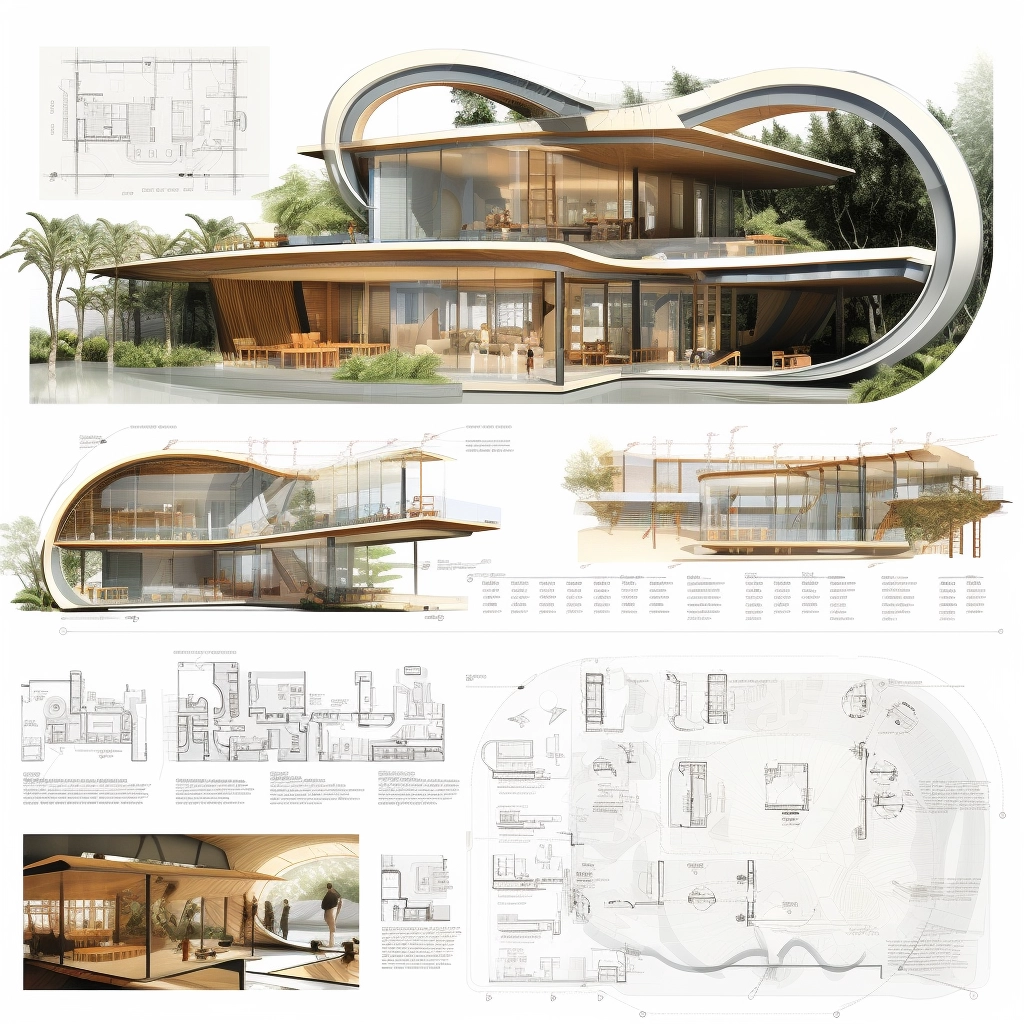
Prompt: interior of the Japanese pod/tube hotel built like an atrium with an indoor courtyard on the bottom floor with furniture, open tall atrium design, functional space, Archviz, hexagonal architecture, closed-off pod hotel with hexagonal doors, 4 pods per wall, 4 stories with short terraces and stairs leading up to higher floors, terraces/walkways overlooking the indoor courtyard, high POV, modern , elegant color palette of oranges, browns, and blacks. The design should be open and inviting, minimalistic yet functional with furniture designed into the architecture –v 5.2
Result: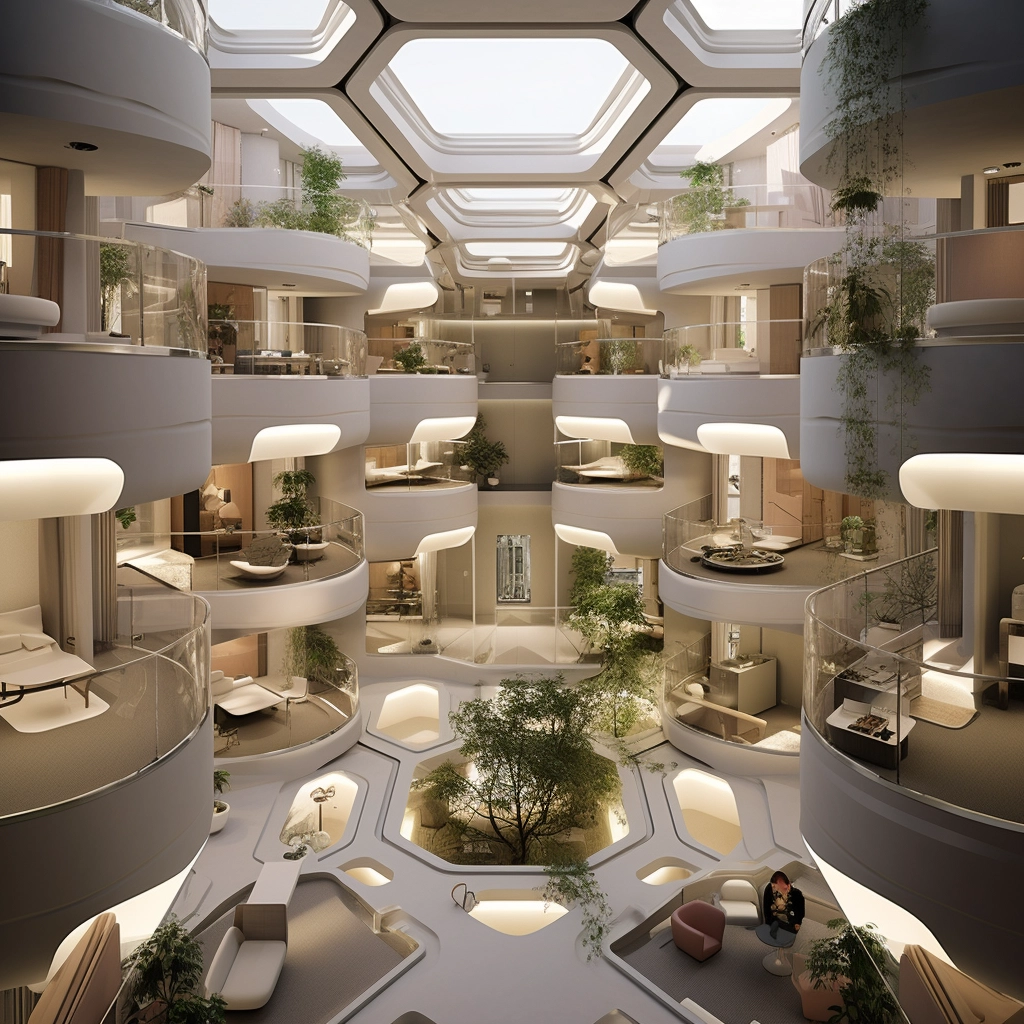
Prompt: Generate three-view drawings (top view, front view, and side view) of a typical Australian residential house. The house should incorporate the following features commonly seen in Australian homes: 1. Single-story standalone house with a small garden and backyard. 2. Brick and timber construction with brick exterior walls and wooden interior structure. 3. Balconies or terraces for outdoor leisure. 4. Open floor plan integrating kitchen, dining, and living areas. 5. Consideration of natural light with large windows and glass sliding doors. 6. Neutral color palettes like white, gray, and beige. 7. Outdoor living spaces such as BBQ area, swimming pool, garden, and courtyard. 8. Adequate air conditioning and ventilation systems. 9. Inclusion of water-saving devices and designs due to potential water scarcity. 10. Incorporation of a pitched roof, facilitating rainwater collection and easy runoff. Please ensure that the three-view drawings accurately capture the outlined features while maintaining a realistic and cohesive architectural design. –v 5.2
Result: 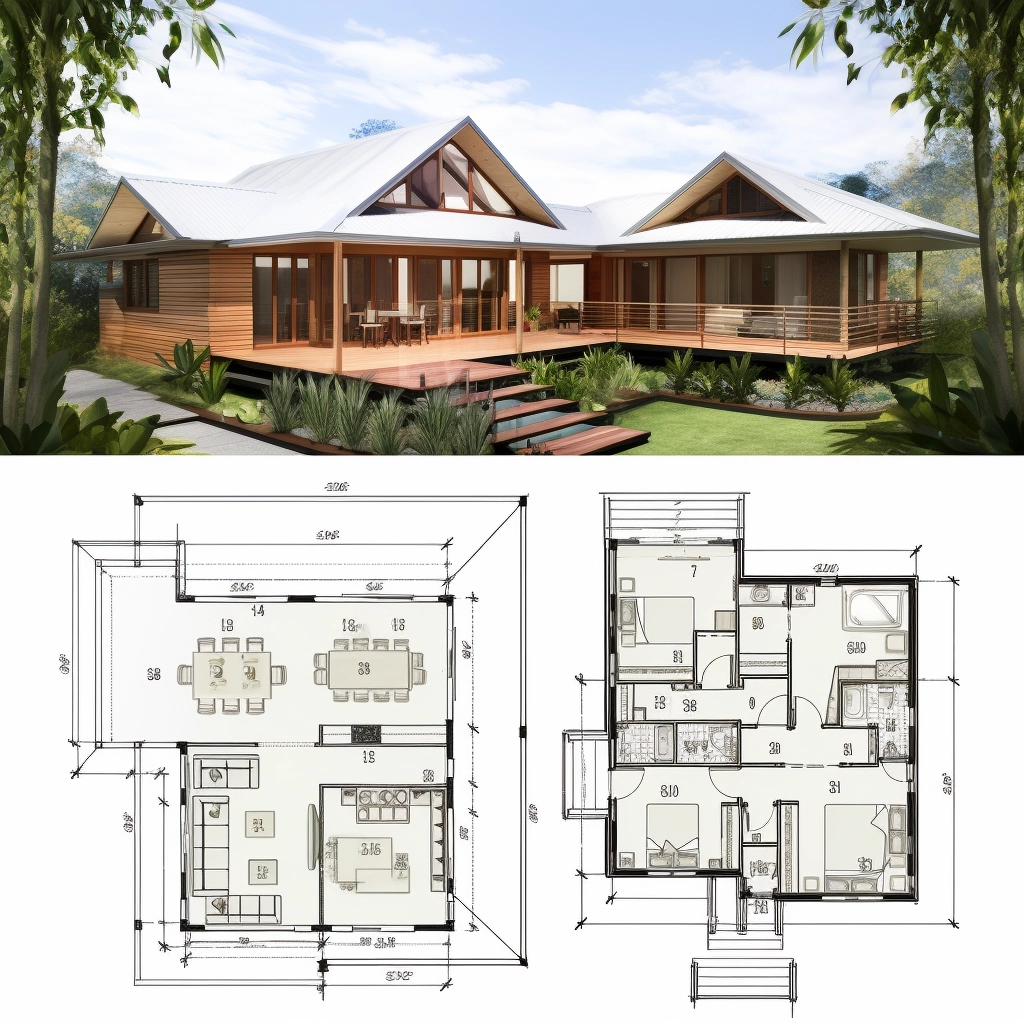
Embracing Iteration with Midjourney
A key aspect of Midjourney is its facilitation of rapid ideation and iteration. This iterative process is crucial, requiring architects to adopt a flexible, risk-tolerant approach to design. Through continuous refinement and stakeholder feedback integration, architects can develop solutions that meet client expectations and stand out in their uniqueness and innovation.
Conclusion
In conclusion, Midjourney stands as a transformative force in architectural design, marking a significant shift in how architects approach their craft. This innovative tool harnesses the power of generative AI to open up a world of possibilities, allowing architects to push the limits of traditional design and explore new, creative frontiers. By automating routine tasks, Midjourney enables architects to focus on the more creative and nuanced aspects of design, leading to more personalized, high-quality, and innovative architectural solutions. Its iterative process, which is central to its functionality, encourages a dynamic and flexible approach to design, fostering an environment where creativity and client-focused solutions thrive. As we move further into an era where technology and creativity intersect, Midjourney exemplifies the potential of AI in enhancing and transforming the architectural landscape, making it an indispensable tool for architects looking to redefine the boundaries of their field and create impactful, sustainable, and aesthetically pleasing structures.