Introduction
In our rapidly evolving digital age, artificial intelligence (AI) leads the way in innovation. You’ve probably heard the term “neural networks” linked with AI. But what are these neural networks? How do they work? And why do they matter so much in our daily AI interactions? You’re in the right place if you’re asking these questions. In this beginner’s guide, we’ll unravel the mysteries of neural networks. We’ll give you a clear picture of how they’re driving the AI revolution.
What are Neural Networks?
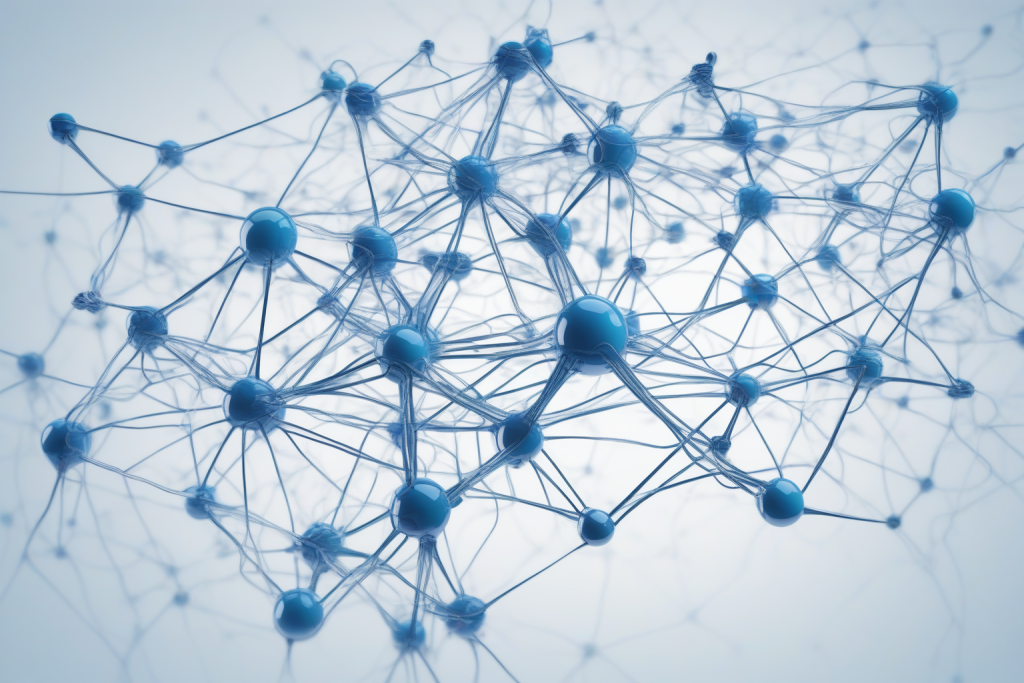
Imagine billions of neurons in our brains, all communicating and collaborating. They process vast amounts of information every second. Neural networks aim to mirror this process using “artificial neurons.” At their core, they’re computational models inspired by how the human brain works.
A neural network has three main parts:
- Input Layer: Data enters the system here. Think of it like our senses feeding information to our brains. In a neural network, the input layer receives the initial data.
- Hidden Layer(s): This is where the magic happens. The data from the input layer undergoes processing and transformation here. Depending on the task, a network might have one or multiple hidden layers.
- Output Layer: After processing, we get the final result here. This layer offers a prediction or classification based on the processed data.
While “neural networks” might sound like a direct replica of our brain’s function, they’re a simplified model. Yes, they draw inspiration from human neural structures, but they operate differently and have their limitations.
Why are Neural Networks Important?
Neural networks have carved a significant niche in AI, driving many technological breakthroughs. Let’s see why they stand out:
- Versatility: Neural networks power a vast range of applications. They’re behind voice recognition systems like Siri and Alexa and also predict complex patterns like weather forecasts or stock market trends.
- Efficiency: Traditional algorithms need specific programming for each scenario. In contrast, neural networks “learn” from data, making them more adept at handling intricate tasks.
- Enhanced Data Processing: In our data-driven age, these networks shine by processing and understanding vast amounts of complex data, such as images or voice recordings.
- Deep Learning: Deep learning, a subset of machine learning, relies heavily on neural networks. These networks, especially the deeper ones, have revolutionized what AI can achieve, from creating art to improving medical diagnostics.
Basic Components of Neural Networks
To get a clearer picture of neural networks, let’s dive deeper into their primary components:
- Neurons: Neurons, or nodes, form the basic computation unit in a neural network. They take input from other nodes or external sources and compute an output. Each input has a weight, adjusted during learning, which signifies its importance.
- Layers:
- Input Layer: The first layer that receives the data directly. For an image recognition task, this layer might consist of the image’s pixels.
- Hidden Layer(s): These layers transform the input data into a format the output layer can understand. More complex data or tasks often require more hidden layers.
- Output Layer: This layer gives the final prediction. For example, in a mail filter, it might predict the likelihood of an email being spam.
- Weights and Biases: These parameters in a neural network adjust the signal strength. Training a network means fine-tuning these weights and biases to get closer to the actual target values.
- Activation Function: After summing up the weighted inputs in a neuron, the activation function determines the neuron’s output. Common activation functions include sigmoid, tanh, and ReLU.
How Do Neural Networks Learn?
Neural networks shine in their ability to learn from data. Let’s break down this learning process:
- Training Data: Every learning journey starts with data. Just as a child learns by seeing and hearing, a neural network needs examples or training data to recognize patterns and make predictions.
- Feedforward and Prediction: With the training data, the network makes an initial prediction. This process of pushing the input data through to get an output is called feedforward.
- Calculating Error: After predicting, the network measures its error. This error, or the difference between its prediction and the actual output, helps the network understand how much it needs to adjust.
- Backpropagation: Here’s where the network truly learns. Using the error, the network adjusts its weights in a process called backpropagation.
- Iterative Learning: The process of feedforward, error calculation, and backpropagation happens repeatedly. With each cycle, the neural network refines its understanding, getting better and better at its task.
Challenges and Limitations
Neural networks have transformed AI, but they also face challenges:
- Overfitting: A network might sometimes learn its training data too well, to the point of including noise and outliers. While it might excel with the training data, it struggles to generalize to new, unseen data.
- Data Dependency: Especially deep networks need massive amounts of data for effective training. Limited or biased data can lead to inadequately trained networks.
- Computational Costs: Training advanced neural networks demands high computational power and time.
- Interpretability: Often called “black boxes,” neural networks make predictions without revealing the reasoning behind them. This lack of clarity can be an issue in sectors like healthcare or finance.
- Local Minima: During training, networks strive to minimize error. But they might sometimes settle for a local minimum instead of the best possible solution, known as the global minimum.
Conclusion
Neural networks play a crucial role in the vast world of artificial intelligence. Their unique ability to learn from data, coupled with their diverse applications, makes them a central topic in AI discussions. But, like all technologies, they come with challenges. For those stepping into AI, grasping both the strengths and limitations of neural networks is vital. As we push forward in the AI field, neural networks will undoubtedly shape its future.
Call to Action (CTA)
Ready to dive deeper into AI? If this guide sparked your curiosity, there’s so much more to explore. Subscribe to our newsletter for the latest AI breakthroughs and insights. Join our community and embark on this thrilling journey with us. And if you found value in this article, please share it. Your engagement drives our mission to deliver top-notch content to inquisitive readers like you.