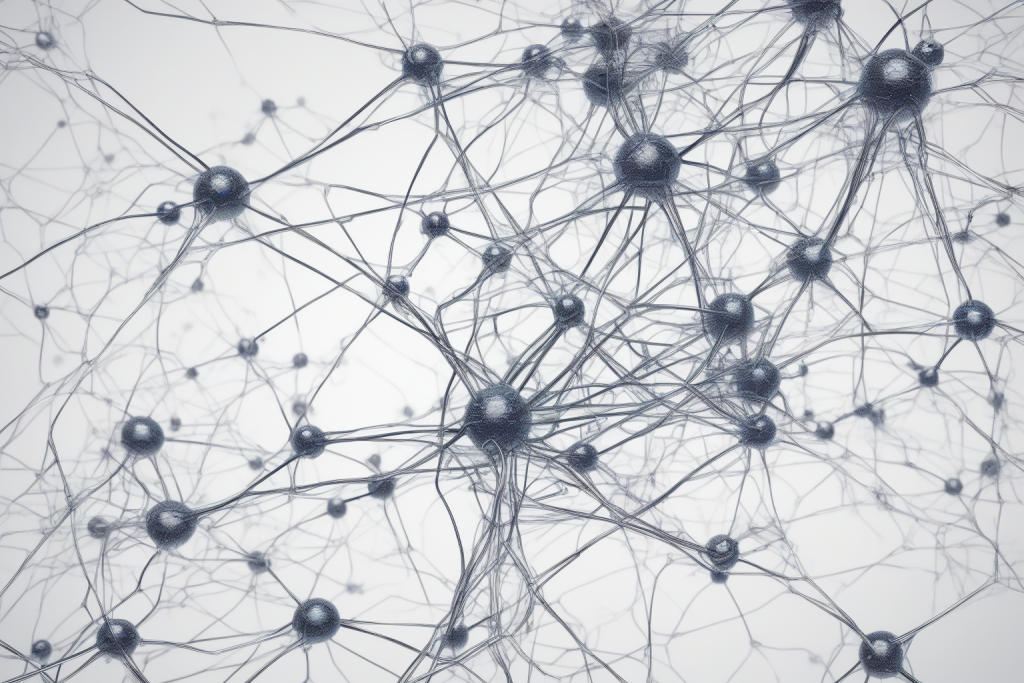
Today, we’re embarking on a journey into one of the most intriguing aspects of artificial intelligence (AI) – Neural Networks. Picture this: a virtual brain that’s trying to mimic our own, with the ability to learn, adapt, and make decisions. Sounds like science fiction, right? Well, let’s dive into this fascinating world together!
Table of Contents
- Questions answered
- These ‘neurons’ within artificial intelligence are fascinating. Can you explain how they’re similar to or different from the neurons found within the human brain?
- It’s intriguing to think of artificial neurons existing in a system. Could you elaborate on how these neurons are organized or structured? Is there a method to how they’re configured?
- The term ‘neural network’ does have a futuristic ring to it. For clarity, could you break down the concept of layers within these networks? What is the significance of having multiple layers?
- Within these layers, there must be some form of directive or guidance for the neurons. How do they coordinate or determine the process they should follow? Is there an inherent hierarchy or rule set?
- The concepts of ‘weights’ and ‘biases’ often surface in discussions about neural networks. Could you delve into their specific roles and how they influence the decision-making processes in AI?
- Considering the communication happening between these artificial neurons, how is the importance or priority of a message determined? Is there a filtering mechanism in place?
- Moving slightly away from neural networks, there’s a term that often gets mentioned: ‘perceptron.’ Could you demystify this concept for us? What is a perceptron in the context of AI, and what makes it foundational?
- The evolution from perceptrons to more sophisticated networks seems like a significant leap. What propelled this shift? Was there a groundbreaking development that acted as a catalyst?
- Earlier models of AI, like the perceptron, were innovative for their time. Could you discuss why the field needed to evolve beyond these models? What limitations were encountered?
- In contemporary discussions about AI, ‘deep architectures’ is a term that’s gained prominence. What does this refer to, and why are these architectures pivotal in current and future AI applications?
- Conclusion
- References
Questions answered
These ‘neurons’ within artificial intelligence are fascinating. Can you explain how they’re similar to or different from the neurons found within the human brain?
Ah, the remarkable concept of neurons, a favorite topic in the realm of artificial intelligence! When we talk about neurons in AI, we’re indeed entering a world inspired by the human brain, but with a digital twist. Let’s unpack that a bit.
In our brains, neurons are the electrically excitable cells that buzz with activity, transmitting information through electrical and chemical signals. Imagine them like the postal workers of your brain, delivering messages from one area to the next, ensuring everything from moving your fingers to recalling a memory happens smoothly.
Now, enter the realm of AI. The ‘neurons’ here are virtual imitations of our biological neurons. Picture them as lines of code or functions within a program, designed to mimic the message-passing process of their biological counterparts. But instead of passing electrical impulses, they deal with numerical data. These digital neurons receive input data, process it (akin to the ‘thinking’ part), and then pass on their own signals.
One fascinating similarity is how both types of neurons learn. Our brain’s neurons adjust their synapses (connections to other neurons) based on new experiences and learning. In a comparable fashion, artificial neurons tweak their parameters, often called ‘weights,’ during a process known as training. This is when they’re exposed to tons of data, learning to adjust their outputs based on patterns in the input – sort of like getting better with practice.
However, there’s a clear distinction, too. While human neurons boast a complex biological structure and rely on a mix of electrical signals and neurotransmitters, artificial neurons are simplified, mathematical functions. They’re less chaotic, more predictable, operating within the boundaries of their programming.
This beautiful blend of biology-inspired structure and computational function is what sets the stage for the incredible capabilities of neural networks in AI. Speaking of which, the way these artificial neurons come together in a system is a story in itself!
It’s intriguing to think of artificial neurons existing in a system. Could you elaborate on how these neurons are organized or structured? Is there a method to how they’re configured?
Absolutely, diving into how artificial neurons are structured is like exploring the blueprint of a digital city. So, let’s embark on this urban expedition of sorts!
In the world of AI, these neurons don’t float around willy-nilly; they’re organized meticulously into what we call ‘neural networks’. Imagine a beehive, where each cell is a tiny world of activity contributing to the whole. In a similar fashion, each artificial neuron is like a hub of computational energy, and when you link these hubs together, you get bustling pathways of information – this is your neural network.
Now, structuring these networks isn’t a game of digital Jenga; it’s more methodical. The neurons are arranged in layers, much like floors in a skyscraper. You’ve got your ground level, known as the ‘input layer’, where the neurons receive various signals or data, like sensory information we get from seeing, hearing, or touching.
Then, these signals travel up the ‘floors’ or layers, getting transformed along the way by our neuron ‘inhabitants’ who are all abuzz with activity. These middle layers, known as ‘hidden layers’, are where the magic happens. Our artificial neurons, each working like a mini-calculator, make computations, apply functions, and essentially, ‘decide’ how much of this information to pass on.
At the top, we have the ‘output layer’. After the information has journeyed up the floors, being tweaked and transformed, it reaches this point where decisions are made, like determining what a picture represents or translating a sentence.
The intriguing part? There’s no one-size-fits-all structure. Different networks can have varying numbers of layers, neurons, and connections, much like how cities have diverse architectural styles. This diversity is what allows them to learn different things and perform a wide array of tasks.
And speaking of tasks and learning, the way these layers work together to achieve this is a fascinating saga that leads us to the concept of ‘neural networks’ in more depth.
The term ‘neural network’ does have a futuristic ring to it. For clarity, could you break down the concept of layers within these networks? What is the significance of having multiple layers?
Ah, stepping into the world of neural networks truly is like venturing into a science fiction novel. But here’s the twist: it’s real, and it’s happening now in servers, computers, and AI research labs worldwide. Let’s unravel the mystery of these ‘layers’ in our neural network cityscape.
Picture a grand, modern building. It’s not just a chaotic stack of bricks, right? It’s a well-designed construct with floors, each with its own purpose. The ‘layers’ in a neural network are quite similar; they’re tiers in the system, each playing a unique role in the learning and thinking process.
First, the ‘input layer’ is our lobby, the grand entrance. This is where the network receives its information — whether it’s images, sounds, text, you name it. The neurons here, like concierges, receive this data and then pass it on to the next level.
Now, here’s where it gets spicy: the ‘hidden layers’. Why ‘hidden’? Not because they’re shy or secretive, but because they’re the internal processing floors, where the outside world doesn’t see what’s happening. These layers are the network’s bustling offices, where the data is reviewed, analyzed, and transformed. Each hidden layer could perform its own operation, progressively extracting features from the input. For instance, in image processing, the first might identify edges, the next spots shapes, another discerns textures, and so on.
Having multiple hidden layers is like having several departments in a company. Each one specializes in something different, making sense of the data in their own unique way. This depth is crucial because it allows the network to learn complex, abstract concepts by building a hierarchy of learned features from simple to complex. It’s this layered learning that makes our AI so smart and adaptable.
Finally, we reach the penthouse: the ‘output layer’. After all the hustling and bustling down below, the final decisions are made here — the big outputs. It’s where the network answers the question it’s been asked, based on the information and learning it underwent in the layers below.
But, one might wonder, with all these layers working away, how does the network keep things organized? How do the neurons know what to do in this grand building of computation and learning?
Within these layers, there must be some form of directive or guidance for the neurons. How do they coordinate or determine the process they should follow? Is there an inherent hierarchy or rule set?
Oh, indeed, the inner workings of these neural networks are nothing short of a well-orchestrated symphony. Each neuron, an instrument, and the layers, different sections of the orchestra, all come together in harmony under the guidance of a skilled conductor. Now, who is this conductor, you ask? Enter the realm of ‘learning rules’ and ‘algorithms’ — the maestros of the neural symphony.
Here’s how it works: Each neuron isn’t just buzzing away on its own; it’s part of a grander scheme. The neurons receive inputs, right? Think of these as musical notes. But not all notes are played equally; some need to be loud, some soft, and that’s where ‘weights’ come in. These are the neuron’s way of knowing how important each input is, akin to how much emphasis to put on each note. The process of adjusting weights is like fine-tuning an instrument, and it’s crucial to the learning aspect of artificial intelligence.
Now, this tuning is no random act. It’s governed by rules known as ‘learning algorithms.’ These algorithms adjust the weights based on the outcome of the network’s performance, like a feedback session after a concert. If the network makes mistakes (hit the wrong notes), the algorithm helps the neurons ‘learn’ by adjusting their weights (tuning the instruments) to perform better next time.
But wait, there’s more! Neurons in each layer don’t just pass on the musical score; they add their own flair, transforming it, making it more complex and richer, layer by layer. This transformation is guided by functions aptly named ‘activation functions’ — the neural network’s rhythm section if you will. They decide whether a neuron should pass the signal forward (join the symphony), and if so, how much emphasis it should have.
This entire system — the learning, the adjusting, the transforming — all happens in unison and in real-time, allowing the network to perform complex tasks, adapt, and improve. It’s not just a static set of rules but a dynamic, evolving process. And the beauty of it? It’s all happening as the data flows through, like music in a live performance.
Speaking of performances, the concepts of ‘weights’ and ‘biases’ in this neural symphony are soloists deserving of a spotlight. Their solo performances can sway the entire concert.
The concepts of ‘weights’ and ‘biases’ often surface in discussions about neural networks. Could you delve into their specific roles and how they influence the decision-making processes in AI?
Diving into ‘weights’ and ‘biases’ is like uncovering the secret ingredients in a master chef’s signature dish. These elements are subtle, often not directly noticeable, but they are absolutely pivotal in defining the final flavor, or in our case, the outcomes.
Let’s start with ‘weights,’ the backbone of learning in neural networks. Imagine you’re trying to teach someone the concept of different cuisines. You’d emphasize the importance of certain ingredients over others, right? In Italian cooking, for instance, you might stress the role of garlic, but for Japanese dishes, it’s all about the umami of seaweed. ‘Weights’ in neural networks function similarly. They signal the importance of the input data, determining how much influence each piece of information should have on the final outcome.
During the network’s training (its culinary school, so to speak), it adjusts these weights. How? By tasting the dish! If the result isn’t quite right, it tweaks the recipe, altering the weights until the flavors balance perfectly. This ‘taste test’ is done through a feedback loop, adjusting and readjusting, helping our chef — the neural network — learn from its mistakes.
Now, onto ‘biases.’ If ‘weights’ are our ingredients, then ‘bias’ is the personal touch, the unique flair a chef might add. It’s a kind of nudge, ensuring the neuron fires in the right direction. For instance, if a dish is consistently too bland, a chef might develop a ‘bias’ towards adding a bit more salt, just to kick things off. In our neural network, biases help by adding a fixed value to the neuron’s input, pushing it a tad closer to the correct output, especially during those early stages of learning when it’s all still trial and error.
Together, weights and biases are the unsung heroes of the neural network’s decision-making process. They fine-tune the learning process, ensuring that our digital chef eventually serves up exactly what we’re craving.
But, pondering these delicate adjustments might lead one to wonder about the broader communication within the network. How do these neurons decide which messages are crucial? What tells a neuron that its piece of information is the secret spice?
Considering the communication happening between these artificial neurons, how is the importance or priority of a message determined? Is there a filtering mechanism in place?
Ah, the art of neural gossip! Just like in any bustling community, not all chatter in neural networks is equally important. Some messages are the hot topic of the day, while others are just idle background noise. So, how do our digital denizens decide what’s worth passing on?
Here’s where ‘activation functions’ come into play, the town criers of the neural network village. These functions help each neuron assess the messages (data) they receive. Picture a neuron as a villager in a town square, hearing all sorts of stories and news (inputs). Now, this villager, armed with a set of rules (activation function), decides whether the news is sensational enough to shout out to others.
These rules aren’t arbitrary; they’re mathematical functions the AI researchers have set. A simple example is: if the total ‘story’ the neuron hears (numerical data) exceeds a certain juicy threshold, it’ll pass it on with a specific intensity. If not, our villager stays silent, deeming the information not spicy enough for the community’s ears.
What’s fantastic here is that this isn’t just a ‘yes’ or ‘no’ decision. Our town crier can modulate the volume of the announcement based on how impactful the news is, ensuring the really groundbreaking stuff gets the attention it deserves. This mechanism keeps the network from being a cacophony of noise, letting the truly valuable information flow through the system, aiding in learning and decision-making.
This intricate game of digital telephone is foundational in how neural networks process and interpret information, reflecting the essence of learning and adaptation. However, the fascinating thing is, this isn’t where the story began. The saga of artificial intelligence has humble origins, rooted in a concept known as the ‘perceptron’ — the seed from which the mighty neural network tree grew.
Moving slightly away from neural networks, there’s a term that often gets mentioned: ‘perceptron.’ Could you demystify this concept for us? What is a perceptron in the context of AI, and what makes it foundational?
Picture a humble little cottage in the vast landscape of artificial intelligence: that’s our perceptron. It’s not a sprawling mansion or a high-tech skyscraper; it’s the quaint starting point of the journey, the genesis of neural networks.
So, what is this perceptron? Imagine a tiny office worker with one job: to decide whether to pass along a message or not. This worker receives notes (inputs), each with a level of importance attached (weights). Our diligent clerk adds up these weighted notes, and if the total importance exceeds a certain level (a threshold), they send the message upstairs (output). That’s a perceptron — a single, binary decision-maker.
Why is this simple thing so special, you ask? Well, back in the day, this little perceptron was revolutionary. It was the 1950s, and computers were these massive, clunky machines doing straightforward calculations. Then came the perceptron, introducing an element of decision-making, a glimmer of ‘thinking.’ It wasn’t just following fixed instructions; it was evaluating its inputs and making a choice, a rudimentary form of learning!
The perceptron was the first step towards teaching machines to understand patterns, like recognizing simple images or shapes. It was foundational because it provided a glimpse into a future where computers could do more than compute; they could make decisions, potentially learn, and maybe even understand.
However, much like a single cottage cannot make a bustling city, the perceptron was limited. It could only handle tasks that were linearly separable (think separating black and white marbles with a straight line). Real-world data, as we know, is messy, complicated, and doesn’t play by such simple rules.
This realization leads us to the dawn of a new era in AI, where researchers began dreaming of interconnected perceptrons, vast neural networks capable of untangling the complex webs of real-world information. But how did we get from that modest cottage to the metropolis of modern AI?
The evolution from perceptrons to more sophisticated networks seems like a significant leap. What propelled this shift? Was there a groundbreaking development that acted as a catalyst?
Imagine the world of artificial intelligence as a bustling, dynamic city, expanding and evolving. In the beginning, there were only perceptrons, like little cottages scattered here and there — charming but simple. Each could make a basic decision, but the scope was limited. It’s like having a phone that only sends texts; useful, yes, but you know it could do so much more.
The leap from these solitary ‘cottages’ to a sprawling metropolis of neural networks wasn’t overnight. It was a series of ‘Eureka!’ moments and breakthroughs that paved the way. One such pivotal moment was the realization that while a single perceptron had its charms, it was severely limited in its analytical prowess, much like trying to understand a film by watching a single frame.
Enter the concept of ‘layering’ — the groundbreaking development that turbocharged AI evolution. Researchers discovered that by stacking these perceptrons, layer upon layer, and orchestrating their interactions, you could create a network capable of understanding much more complex patterns and nuances. It’s like going from sending plain texts to sharing high-definition videos in your chats.
This ‘deep’ structure, these multilayered networks, opened up a world of possibilities. Now, instead of just recognizing black and white, the system could appreciate the myriad shades of grey in between. It was akin to developing a full language instead of just knowing a few phrases.
However, this evolution wasn’t just about adding more layers. The algorithms ‘teaching’ these networks had to evolve as well. Innovations in learning protocols, like backpropagation, gave these neural networks a way to learn from mistakes, adjust, and improve — essentially, they taught our city of AI how to be self-aware and grow.
But, as with all tales of progress and development, this journey wasn’t without its bumps. The perceptrons and their early models were pioneers, yes, but they faced challenges and limitations that prompted the question: “Where do we go from here?”
Earlier models of AI, like the perceptron, were innovative for their time. Could you discuss why the field needed to evolve beyond these models? What limitations were encountered?
Oh, absolutely! Journeying back to the days of early AI is like flipping through an old family album. You see the potential in those ‘baby photos,’ but you also realize how much growth was needed. The perceptron, and others of its time, were indeed groundbreaking — they were the toddlers taking their first steps in the world of AI. However, as with all youngsters, their view of the world was quite simplistic.
One major hiccup was that these early models, the perceptrons, were a bit too optimistic. They expected the world to be black and white, easily separable. It’s like trying to use a paper map in the era of GPS; you only get the broader strokes without the intricate details. For instance, a single-layer perceptron could not process datasets that weren’t linearly separable (imagine trying to separate a mixture of sand and glitter — it’s all intermingled).
Now, this was a big deal because the real world is messy and complex. You’ve got datasets that are more like tangled webs than neat, organized files. This limitation became famously known through the XOR problem — a simple logical function that these early perceptrons just couldn’t handle because it required understanding that not all relationships are straightforward.
Additionally, these models were lone wolves, solitary units trying to make sense of the world. But many brains are better than one when solving complex problems, right? This is why the evolution toward multilayer networks, or ‘deep learning,’ was crucial. It was about building a community of perceptrons, all bringing their unique ‘perspectives’ to interpret the nuanced data.
And there’s the learning aspect. Early models could learn, sure, but their learning was rigid, limited. They lacked the finesse and adaptability needed to grasp more abstract concepts, like recognizing speech patterns or subtle emotions in an image.
These limitations were the writing on the wall that more sophistication was needed. It was time for AI to ‘grow up’ and embrace complexity, to move from those early steps to a confident stride into deeper, more nuanced understanding.
This shift wasn’t just necessary; it was inevitable, marking the end of one era and the exciting dawn of another. But, reflecting on these strides, one can’t help but wonder about the intricate tapestry that constitutes modern AI. What are these ‘deep architectures’ that represent such a leap forward from the perceptrons of yesteryears?
In contemporary discussions about AI, ‘deep architectures’ is a term that’s gained prominence. What does this refer to, and why are these architectures pivotal in current and future AI applications?
Stepping into the world of ‘deep architectures’ is like going from snorkeling in a coastal lagoon to deep-sea diving in the ocean’s abyss. It’s deeper, darker, and teeming with complexities that our early AI explorers (like the perceptrons) could never have navigated.
So, what makes these architectures ‘deep’? Picture our neural network, our bustling AI city. In the early days, this metropolis was just a few blocks — a perceptron here, a simple layer there. But with ‘deep architectures,’ we’re talking about a sprawling urban complex, with skyscrapers reaching into the clouds. These towering structures represent layers upon layers of neurons, each floor buzzing with activity, processing information, and passing it up to the next.
In these depths, the magic unfolds. Each layer of neurons isn’t just parroting information; it’s adding context, interpreting, transforming. The first layer might pick up the basic lines of an image, the next understands shapes, and as you go higher, the layers start recognizing complex features like emotions in a face or the subjects of a painting. It’s this depth that allows AI to grasp nuances that mimic human understanding — sometimes even surpassing it.
But why is this pivotal? Well, as we venture into new frontiers — self-driving cars, personalized medicine, real-time language translation — we need an AI that understands the world in all its chaotic beauty. These ‘deep’ networks, with their intricate design, are like having a multidisciplinary team of experts dissecting every bit of data, offering insights that are profoundly more sophisticated than a one-expert (or one-perceptron) take.
The future is bright, but it’s also uncharted. As we inch closer to AI systems that can innovate, create, and maybe even understand emotion, these deep architectures are our vessels into these unknown waters. They hold the promise of AI that enhances lives, solves complex global challenges, and could potentially understand and replicate facets of human intelligence and empathy.
And as we stand on this thrilling precipice, looking out into a horizon brimming with potential, it’s clear that the journey of AI is just beginning. Who knows what the next evolution will bring as we dive deeper into the realms of artificial intelligence?
Conclusion
As we’ve journeyed through the landscape of artificial intelligence, we’ve seen the humble beginnings of this technology in the form of perceptrons, simple units capable of binary decisions. The evolution from these early models to the complex, multi-layered neural networks of today represents a monumental leap in technological advancement, driven by the need to process the intricate, nuanced data of the real world.
Deep architectures in AI are not just futuristic constructs; they are current realities shaping numerous industries and even our daily lives. They allow for an unprecedented level of understanding and interaction with data, leading to innovations ranging from real-time language translation to medical breakthroughs.
As we stand on the cusp of future discoveries, it’s clear that the exploration of AI is far from over. The potential for AI to enhance lives, revolutionize industries, and potentially understand aspects of human intelligence and emotion is both thrilling and daunting. It sets the stage for a future where the boundaries between technological capability and human ingenuity become increasingly intertwined.
References
- Goodfellow, I., Bengio, Y., Courville, A., and Bengio, Y. (2016). Deep Learning (Adaptive Computation and Machine Learning series). The MIT Press. MIT Press
- McCulloch, W.S., Pitts, W. (1943). A Logical Calculus of the Ideas Immanent in Nervous Activity. Bulletin of Mathematical Biophysics, 5: 115. Springer Link
- Rumelhart, D.E., Hinton, G.E., and Williams, R.J. (1986). Learning representations by back-propagating errors. Nature, 323: 533-536. Nature.com
- LeCun, Y., Bengio, Y., and Hinton, G. (2015). Deep learning. Nature, 521(7553), 436–444. Nature.com
- Russell, S. J., Norvig, P. (2020). Artificial Intelligence: A Modern Approach (4th Edition). Pearson. Pearson