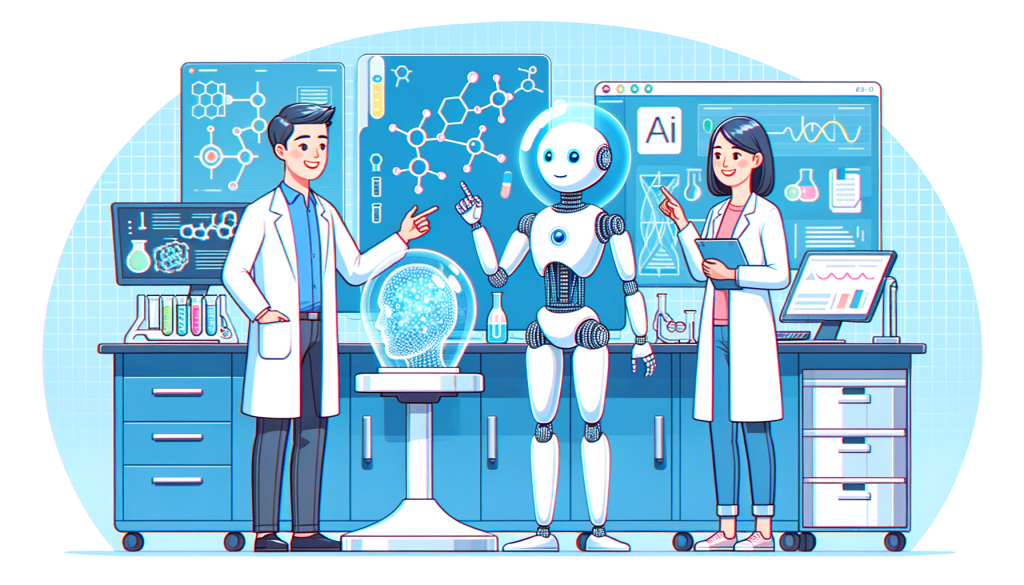
Google has developed an AI tool designed to serve as a virtual collaborator for biomedical scientists, aiming to enhance research capabilities. This innovative tool, tested by researchers at Stanford University and Imperial College London, utilizes advanced reasoning to help scientists analyze extensive literature and formulate new hypotheses. The initiative reflects the growing trend of AI integration in various professional settings, following the success of models like ChatGPT.
DeepMind, Google’s AI unit, has prioritized scientific applications, with its leader, Demis Hassabis, recognized for contributions to AI technology that earned a Nobel Prize in Chemistry. In experiments focused on liver fibrosis, the AI co-scientist demonstrated promising results, suggesting potential to improve expert-generated solutions over time.
Google emphasizes that this AI will complement, rather than replace, human researchers, fostering increased scientific collaboration. The findings are preliminary and require further validation, but they indicate a significant potential for AI systems to augment scientific endeavors. Overall, this development could mark a transformative step in the collaboration between AI and researchers in the biomedical field.