
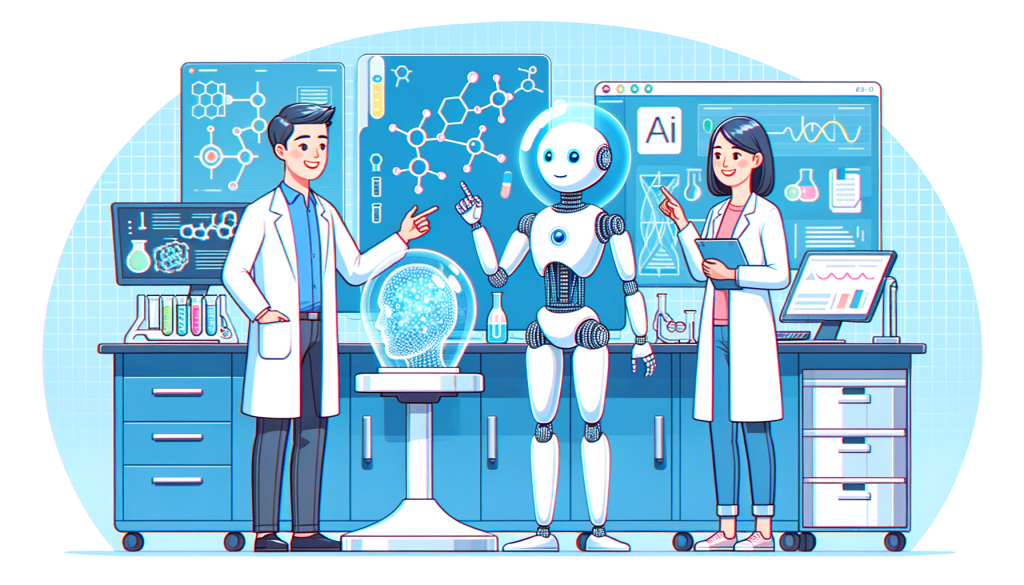
Create an illustration in a cheerful, light-hearted style for an article focused on AI and biomedical research. Render a modern lab setting where a humanoid AI, represented with a wireframe design, is assisting human researchers. Depict a Caucasian male researcher and a South Asian female researcher both looking at a holographic display showing scientific data and molecules. Make the AI character gesture towards the holographic display, indicating its role as collaborator. Incorporate elements to subtly hint at Google's involvement, such as the use of their signature colors in the UI of the holographic display. Please maintain a 3:2 aspect ratio.

google-develops-ai-co-scientist-aid-researchers-2025-02-19

Google vyvinul nástroj s umelou inteligenciou, ktorý má slúžiť ako virtuálny spolupracovník pre biomedicínskych vedcov…
Čítať ďalej
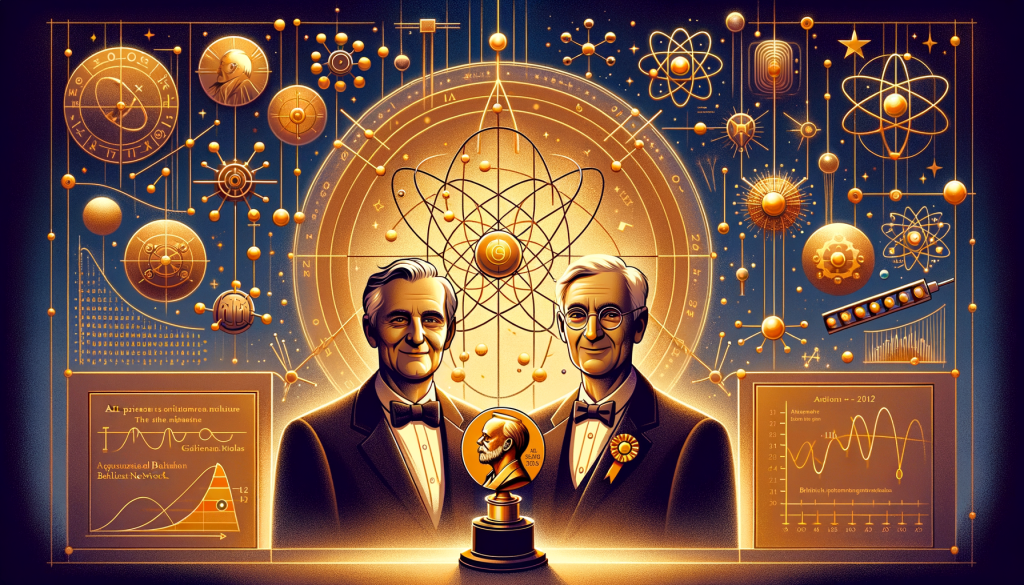
Create a detailed, 3:2 aspect ratio illustration for the article titled 'AI Pioneers Win Nobel Prize for Physics'. It should be in a warm and cheerful style, embodying aspects of the bright, emphatic and animated 3D style typically seen in mainstream animation studios pre-1912. The primary scene should depict the two main characters as academic figures, standing on either side of a symbolic, golden Nobel Prize medal. Behind them, let's have a graphical representation of an artificial neural network, hinting towards their contribution. Also subtly include elements symbolizing physics, such as an atomic model or a constellation of stars and their AI-related works like the Boltzmann machine and gradient descent methods represented intelligently in the backdrop. Remember to visually maintain a positive atmosphere throughout, reflecting the landmark recognition of AI's impact on science.

ai-pioneers-geoffrey-hinton-and-john-hopfield-win-nobel-prize-for-physics

Geoffrey Hinton a John Hopfield sa zapísali do histórie udelením Nobelovej ceny za fyziku za…
Čítať ďalej
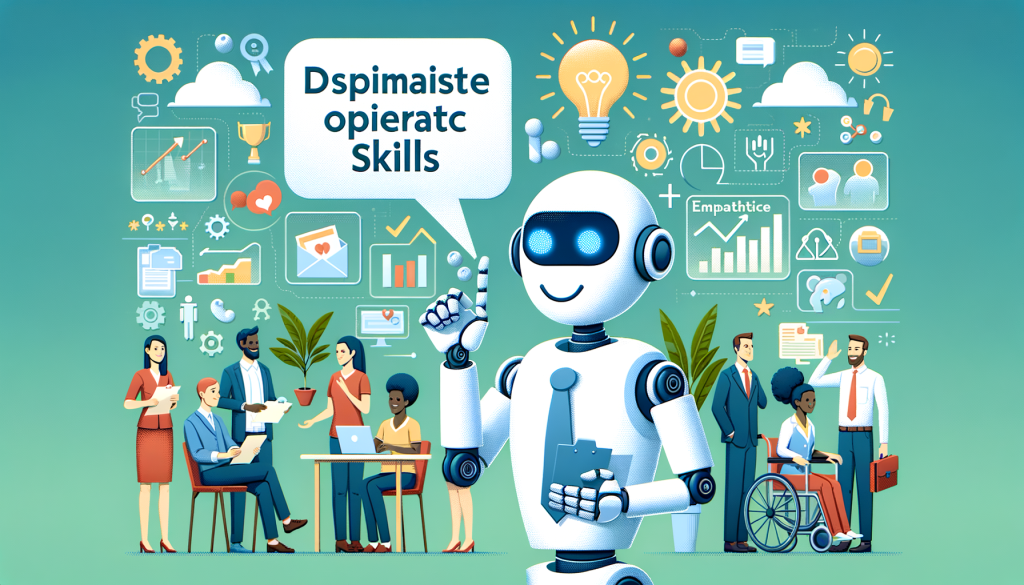
Create a 3:2 aspect ratio illustration that depicts the message from the article about the importance of diverse skills in the job market. The image should have a friendly, positive feel to it. In the foreground, consider including a humanoid optimistic robot as a character, which is prominently associated with artificial intelligence and STEM, demonstrating an interaction with human characters. Perhaps it could be trying to perform a creative or empathetic task but is somehow missing the human touch. Around this, depict humans of various descents and genders engaging in jobs that require face-to-face interaction, creativity, empathy, and managerial skills such as healthcare, hospitality, and leadership roles. The image should emphasise the contrast between the inherent human skills against the skills that can be achieved by robots.

Laureát Nobelovej ceny varuje pred náhlením sa do STEM po vzostupe umelej inteligencie

Nobelovou cenou ocenený ekonóm Christopher Pissarides varoval pred nadmerným dôrazom na štúdium predmetov STEM v…
Čítať ďalej